
The Continental Divide Trail
Is Waiting For You
By Diane Spicer
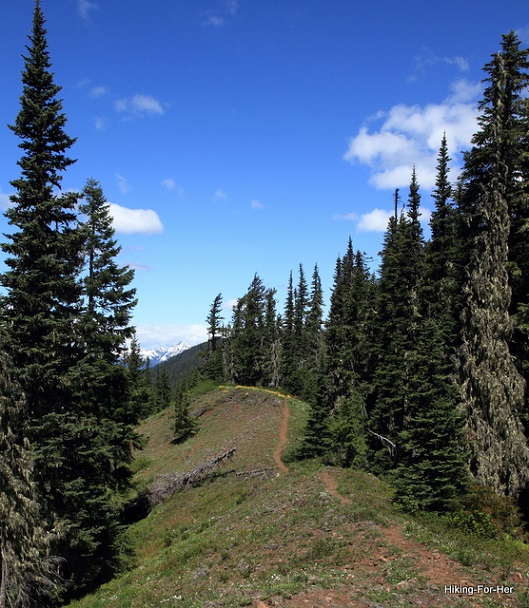
Hikers are fortunate that the Continental Divide Trail exists - a long trail that splits a continent.
Or provides its backbone, if you'd prefer a more poetic description.
That's the claim to fame for the CDT, or Continental Divide Trail, one of the best, and toughest, hiking trails North America has to offer.
Thru hikers, those whose boots crave months of hiking time at a go, are drawn to the CDT usually after breaking in their boots on the Pacific Crest Trail and/or the Appalachian Trail.
- Hiking all 3 in one lifetime earns you a hiking Triple Crown.
In other words, hiking royalty.
Continental Divide Trail details
Although not as well known as the PCT and the AT, this long trail offers plenty of adventure.
2800 miles of adventure, more or less.
- As in 4 or 5 months of it if you aim to complete the entire trail.
Also,
take the word "trail" with lots of wiggle room, because there are miles
and miles of road walking along with route finding across unmarked
terrain ("cross country").
This trail taps your navigational skills, with many alternative routes available.
No wonder hikers tackle it after they've developed a deep skill set.
Where is the Continental Divide Trail?
Let's assume you wish to move in a northbound (nobo) direction.
You can put your boots on the southern terminus of this trail in one of three locations in New Mexico:
- Columbus, NM
- Antelope Wells, NM
- Crazy Cook Monument
The trail wends its way through New Mexico, Colorado, Wyoming, Montana and Idaho.
Hiking this route is not for the faint of heart, or the navigationally challenged.
That's why its so important to consult authorities like the Continental Divide Trail Coalition (CDTC) early in your planning, to get maps, updates and route revisions.
For a detailed selection of free maps compiled by a veteran Continental Divide hiker, take a look at this.
Or use the geospatial pdfs, reduced size pdfs, and app map downloads from CDTC, also free and available here.
Special precautions on the CDT
Hiking the CDT from end to end takes determination over and beyond what hiking the PCT or the AT demands from a hiker.
The trail takes you through severe ecosystems and terrains, with changing weather and temperature conditions:
- the Chihuahuan Desert in New Mexico
- mountains soaring to 14,000 feet in Colorado
- grizzly bear territory in Montana
To name just a few challenges!
Can you see how your hiking camping equipment list will change as you work your way along this trail?
- An ice axe and crampons won't do you any good in New Mexico, but are essential to your safety in high snow years as you traverse the mountainous areas on Colorado hiking trails.
- You will need to mail yourself equipment and supplies, and mail them home again once you're finished with them.
- Water is going to be problematic in New Mexico, not so much as you get into Colorado.
- And as with any long trail planning, you're going to need food caches. You'll get to know the small towns well as you make your way along the trail.
Don't take on this trail unless you're skilled in navigation, using map and compass. Relying on GPS instrumentation may or may not pay off, given the extreme conditions.
Continental Divide Scenic Trail
Let's give you some options.
The CDST is administered by the United States Forest Service (extra points for guessing the correct acronym).
It is more trail-ish than the CDT, and is being used more often by hikers seeking a reliable route.
Do the 2 trails coincide?
Sometimes.
Read up on all of the nuances, along with lots of straightforward advice and comparisons with other long trails from a CDT veteran, here.
CDT Resources
You want to do your homework if you plan on hiking the CDT end to end, or even section hike it.
A perfect way to get a feel for what you're in for? Read a first hand account.
- Read my book review of this woman's journey along the Continental Divide Trail.
- You might like to walk in her boots for 2800+ miles, without ever leaving home!
And once you're back home again...
Don't forget to share your CDT adventures with all of us, using this easy peasy posting process.
Then it's on to planning a new long trail hiking adventure.
Happy CDT Trails!
Home page > Best Hiking Trails >
Continental Divide Trail
|
I get emails all the time about what I wear, eat, carry and love to use on the trail. That's
why I provide affiliate links to you: the best gear that I use myself and have seen used by other hikers is instantly
available for your consideration, and the gear company sends a few
pennies per dollar to this reader-supported hiking website. There is no added cost to you! Everyone ends up a winner: Great gear for you, strong gear companies, and more free hiking tips for everyone. Thanks very much for your support. It's warmly and sincerely appreciated. It also helps send these hiking tips to all your virtual trail buddies around the globe. |
 |
|
Diane Spicer was a beginner hiker in 1971, and never stopped hiking. She founded the Hiking For Her community in 2008 to encourage female hikers, those who wanted to begin hiking as well as those who were in love with this fantastic sport already. On this website she shares expert hiking tips and recommendations, gear reviews and photos from her outdoor adventures so you can learn the necessary skills for comfort confidence and safety on a hike. This reader supported website does not use sponsored or promoted content. There are no ads, no AI content or artificially generated or touched up photos, no paid link placements. Everything you read is based on decades of personal hiking experience in many different locations. Please enjoy these expert hiking tips as you explore what hiking offers in any weather, season or location. |
 |
Scraping the contents of the Hiking-for-her.com website for the purpose of AI (artificial intelligence) LLM (Large Language Model) training is strictly forbidden.
All rights reserved. No duplication of content without permission.
Photo credits: All photos on this website were taken by David Midkiff or Diane Spicer except where noted.
Disclosures
Privacy Policy
Copyright
Media
Hiking For Her is a participant in the Amazon Services LLC Associates Program, an affiliate advertising program designed to provide a means for us to earn fees by linking to Amazon.com and affiliated sites.